We cover Disney parks because we love them.
Food, atmosphere, the whole experience.
But loving something also means being honest about it when something is not right, and the DAS situation has been something we have been watching closely for a while now because it affects real families and their ability to access the parks in a meaningful way.
This week a formal legal complaint advanced to state investigation, shareholders voted on a related proposal, and the new CEO spoke publicly about the program for the first time, all on the same day. We are covering all three because together they tell a clearer story than any one of them does alone.
The Complaint That Just Advanced to Investigation

A full-time power wheelchair user and longtime Disney Vacation Club member filed a discrimination complaint with the Florida Commission on Human Relations on February 20, 2026. The case number is FCHR No. 2026119734. Mediation was supposed to happen before March 18. It did not. The case has now moved to formal investigation.
The guest’s February 24 declaration lays out the problem clearly: “Disney’s operational changes to the Disability Access Service program and related transportation policies have materially impaired my family’s ability to use that ownership interest safely and predictably.”
The part that really lands is what they say about Disney’s suggested alternatives when DAS is denied. Queue re-entry, return-time systems, attempting the standard queue first — the complainant explains why none of those work for them: “So when Disney points to queue re-entry, return-time systems, or some version of ‘attempt the queue first’ when DAS is denied, it’s not offering my family a fallback. For a guest in a chair like mine, that alternative is physically impossible.”
They describe why the queue geometry itself becomes the problem: “Once committed to certain queue geometries, I can become physically locked in.” What Disney calls flexibility, the complainant calls “a risk multiplier.” And they were deliberate about how they documented everything: “I used the process. I documented. I preserved evidence.”
This is not someone venting online. This is a formal legal process with a case number and a state agency now actively investigating.
The Shareholder Vote on the Same Day

Here is where the timing gets interesting. On March 18, the same day the mediation deadline passed and the complaint moved to investigation, Disney shareholders voted on Proposal 7.
Proposal 7, introduced by shareholder Erik Paul, was formally called “Review and Report on Disability Inclusion and Accessibility.” It asked Disney Parks to bring in an independent third party to evaluate its disability access policies from a legal, financial, reputational, and enterprise risk perspective and report back to shareholders. It did not tell Disney to change anything. It asked for a transparent look at the risks of what was already changed.
Five percent of shareholders voted yes. Ninety-five percent voted no.
So on the same day that the state of Florida formally opened an investigation into a DAS-related discrimination complaint, Disney’s own shareholders voted against even commissioning a risk assessment of the program. We are not editorializing here. That is just what happened.
What the New CEO Said About It
New CEO Josh D’Amaro addressed DAS at the Annual Meeting of Shareholders on March 18. He was asked whether Disney would consider restructuring the program to make sure it actually reaches everyone who needs it. He did not say yes and he did not say no.
He said: “Accessibility is deeply personal and for many families, our services for guests with disabilities, they make it possible to enjoy our parks together.” On the current program: “It reflects really extensive work that we’ve done with accessibility experts and medical professionals, all in an effort to better understand individual needs and then really thoughtfully match guests with the right levels of support.” On the individual approach: “It’s important to us that we have individual conversations with families, and that we have a broad range of accommodations that our cast members can recommend through these individual conversations.”
On future changes: “As we look ahead, as we always do, we’ll continue to listen, we’ll learn and apply expert guidance as we evaluate these accommodations over time, and we’ll always be focused on providing great experiences and designing these services to support our guests.”
Worth noting: D’Amaro was Chairperson of Disney Experiences when the 2024 DAS changes were implemented. He is defending a program he built.
A Quick Recap on What Changed in 2024
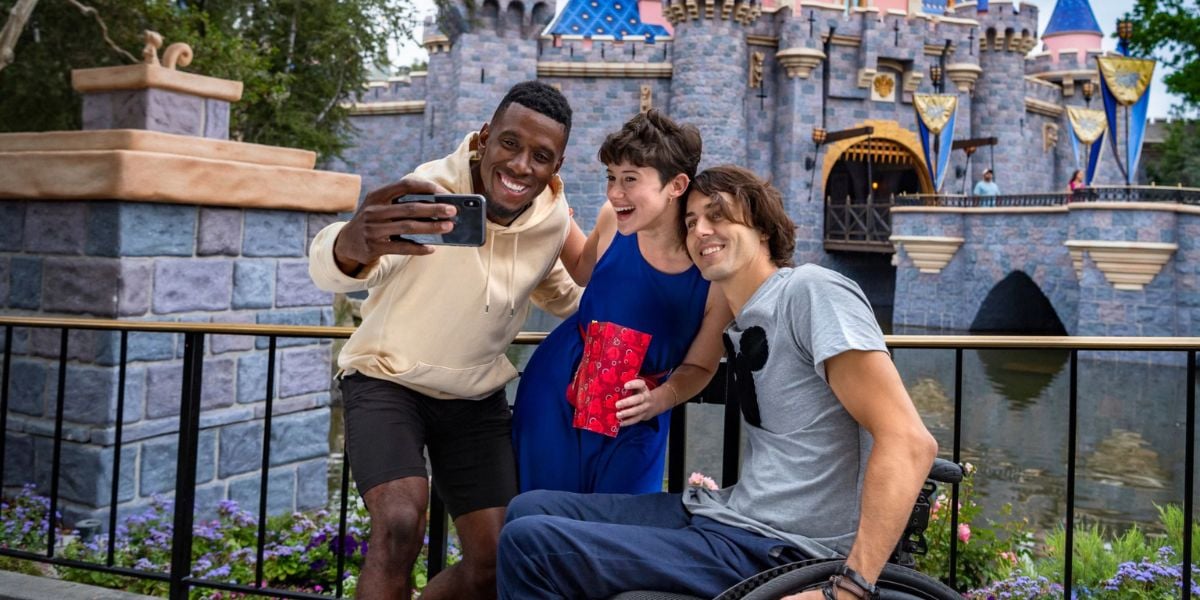
In 2024, Disney updated DAS eligibility to cover guests with a developmental disability like autism or similar, specifically those “unable to wait in a conventional queue for an extended period of time.” That language removed many guests with physical disabilities from eligibility. Reports emerged of cast members telling denied guests to practice waiting in line at home, to rent mobility equipment, or to re-enter queues by finding a party member already waiting.
Disney has made some adjustments since then, including extending how long an approved accommodation stays valid and clarifying the video call process. The core eligibility language has not changed. This complaint and a separate class-action lawsuit filed by a Disneyland Resort guest in 2025 are the two most significant ongoing legal pressures on the program.
What This Means If You Are Planning a Disney Visit
Nothing about the current DAS eligibility requirements has changed as a result of the investigation advancing. Guests visiting Walt Disney World or Disneyland today are navigating the same program as before. The individual accommodation conversation D’Amaro referenced at the Annual Meeting is the most practical path available right now for guests who do not qualify under current DAS criteria but need support to visit the parks.
If that is your situation, contact Disney’s accessibility services before your trip, describe your specific needs in detail, and ask about what accommodations are available beyond DAS. Document what you are told. That matters in every context, legal or not.
We will be following this story closely and will update as the FCHR investigation develops.
Our Disney accessibility guide covers the current DAS program, what alternatives exist, and how to approach the individual conversation process before your visit. Go read it before your trip, go in prepared, and come find us when you are ready to talk about everything else that goes into a Disney day.
If this has affected your family directly, we want to hear your experience in the comments. This story matters and so do the people it is about.