

Walt Disney World is globally renowned as a place of pure escapism—a sprawling, meticulously manicured bubble where the harsh realities of the outside world are supposed to be left at the entrance gates. Yet, for the tens of thousands of Cast Members who work tirelessly to maintain that illusion, the outside world is closing in rapidly. President Donald Trump’s aggressive immigration crackdown and mass deportation agenda are sending shockwaves through Central Florida’s hospitality sector, creating a profound climate of fear for the workers who serve as the backbone of the region’s multibillion-dollar tourism industry.

To understand the gravity of this situation, it is necessary to look past the political rhetoric and examine the actual demographics of the theme park capital of the world. Across the United States, immigrants make up approximately one-third of the entire hospitality workforce. In Central Florida, a region that hosted more than 75 million visitors and generated $5.6 billion in tax revenue in 2024 alone, this demographic is the undisputed engine of the local economy.
The current federal crackdown extends far beyond undocumented border crossings; it is actively destabilizing the lives of people who have lived, worked, and paid taxes in Florida for decades.
The Human Reality at EPCOT’s World Showcase
Nowhere is this tension more visible than at EPCOT, a theme park famously dedicated to celebrating international cultures. Behind the scenes of its bustling pavilions, the fear of deportation has become a daily, exhausting burden.
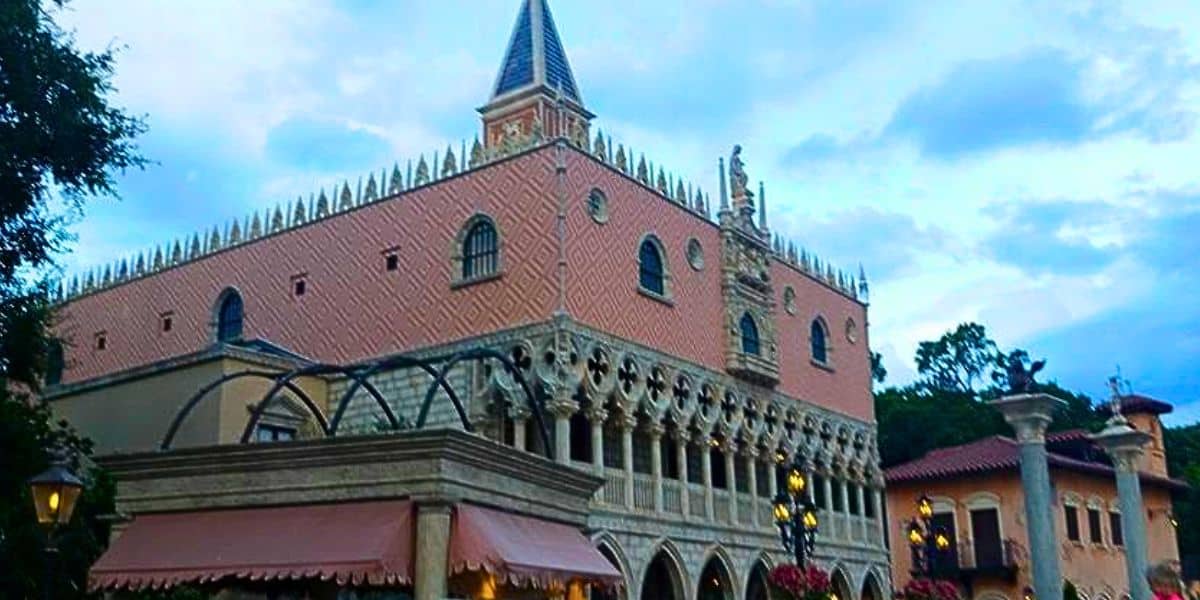
Pericles Joseph is a Haitian immigrant who works as a dishwasher at Via Napoli, a high-volume Italian restaurant within the park. Joseph arrived in the United States alone in 2008, seeking economic stability. Today, he is a homeowner and a father to two daughters who were born in the U.S. Like hundreds of thousands of others, Joseph is lawfully living in the country under Temporary Protected Status (TPS)—a federal designation granted to individuals whose home countries are too dangerous to return to due to armed conflict, natural disasters, or extreme gang violence.
The Trump administration’s recent efforts to revoke TPS designations for several nations, including Haiti, have thrown families like Joseph’s into immediate peril. With his home country currently crippled by violence, Joseph fears that a forced return would put his life—and the lives of his American-born children—at catastrophic risk.

“Every single day is living under threat,” Joseph recently expressed through a translator to Orlando Weekly, summarizing the suffocating anxiety shared by his peers.
His colleague, Evans Corvoisier, a food handler at Via Napoli, echoes these exact sentiments. Corvoisier is also a TPS holder from Haiti who has built his life in the United States over the last nearly twenty years. The prospect of losing his work authorization and facing deportation to a volatile nation he fled two decades ago is paralyzing.
The Data Behind the Fear
Local union leaders are fighting desperately to humanize the statistics being debated in Washington. Isaie Marc, a Haitian immigrant, U.S. citizen, and union representative with Unite Here Local 737—which advocates for roughly 18,000 workers at Disney World—has been a vocal defender of his members at county commission meetings.

“We’re not talking about people who have been here six months,” Marc stated, grounding the emotional debate in hard facts. “There are some people who have been here 10, 18, 20 years, so they’ve built a life in the United States. We’re not talking about criminals. There’s a lot of people who keep the economy going.”
Federal data support Marc’s assertion. According to the nonpartisan Transactional Records Access Clearinghouse, nearly 75 percent of the roughly 68,000 individuals detained by U.S. Immigration and Customs Enforcement (ICE) as of early February have absolutely no criminal convictions on their records.

Furthermore, the climate of aggressive enforcement has caused collateral damage to American citizens. Xiomary Rivera, another union representative for Local 737, recently testified to county leaders that she—a U.S. citizen from Puerto Rico—had been racially profiled and pulled over by local law enforcement multiple times without any evidence of a traffic infraction. The sweeping nature of the crackdown has left entire communities, regardless of legal status, feeling targeted and unsafe.
The Chilling Economic Domino Effect
When a workforce lives in fear, the economic ripples are swift and severe. A recent report released by the Unite Here union titled “Inhospitable” reveals that the national hospitality workforce shrank by an alarming 98,000 workers between December 2024 and December 2025.

Simultaneously, the climate of strict borders and new tariffs is driving away international tourism. The U.S. saw a staggering 2.5 billion fewer trips by international visitors over 12 months, resulting in a $1.2 billion loss in tourism revenue. Even locally, Visit Orlando is projecting a 4.5 percent decline in international visitation for 2025, driven heavily by a massive drop-off in Canadian tourists who are opting to vacation elsewhere.
When theme park Cast Members are terrified of losing their livelihoods or being detained, consumer spending drops. They stop eating out, they halt home renovations, and the broader Central Florida economy naturally constricts.
Protecting the Workforce
In response to the mounting crisis, Unite Here Local 737 is taking aggressive, proactive steps to protect the people who make the Disney magic possible. The union has launched free legal clinics alongside immigration attorneys to ensure members understand their rapidly changing rights regarding TPS and asylum policies.

Crucially, the union has negotiated landmark protections directly into its labor contracts with Disney and several local hotels. These new clauses guarantee that immigrant workers can reclaim their jobs for up to one to two years if their federal work authorization is temporarily lost and subsequently reinstated. It is a vital safety net designed to prevent a bureaucratic delay from destroying a family’s financial future.
As the political landscape continues to shift, Central Florida faces a stark reality: the region’s economic prosperity is inextricably tied to the labor of its immigrant workforce. As union representative Isaie Marc plainly stated, without them, there simply is no industry. Until stability is restored, the workers who power the happiest place on earth will continue to brace for the worst.






”… 75 percent of the roughly 68,000 individuals detained by U.S. Immigration and Customs Enforcement (ICE) as of early February have absolutely no criminal convictions on their records.” Except the fact that they did enter the country illegaly, which is a crime by itself !
If they came into the country illegally, or they overstayed their visa, they have committed a crime. I don’t care whether you call it a misdemeanor or not. It’s still a crime. If your American citizen and get a speeding ticket, that is actually an arrest and it might be a misdemeanor but you still have to take care of it or you pay jail. So I can say is just get all the people out bag them app if we have to black bag them and send them home.
In most cases, a misdemeanor. Would you like to be sent to a country you don’t know for a misdemeanor?
And ICE has been picking up people who are correctly going about attaining citizenship and have been working on it for years. In some cases, they are abducted AT THE COURTHOUSE.
What that says to me is that they (and Trump) don’t like brown people, not that they’re going after criminals.
Obviously, someone had to play the race card. If the person comes from Venezuela and is stopped by ICE, there’s a good chance they know… Venezuela! If the person is picked up at the courthouse, it’s very likely they have a criminal record in the USA or their country of origin. I’m Canadian and I was sent back to my country a month ago because we had brought a few clementines in our vehicle. I had to return to Canada to throw them away and then go back to the USA. Why the hell do you have to enforce regulations to the letter on your northern border and have scandalous laxity during the 4 years of Biden? Answer: so that the Dems stay in power since they do everything they can to not require ID before voting, unlike ALL democratic countries on the PLANET.
Well, Disney, you are a Trump/DeSantis hating organization anyway, so this article is no surprise. Perhaps you should take a look at all your employees. If they are illegal, then they should be replaced with someone who is legal. Why withhold jobs from legal citizens? You are basically saying in this article that you hire illegals or those that have illegals in their family such as a spouse. Otherwise, why all the fear and panic? Is it just a few or hundreds? Perhaps as an employer you should be fined for such practices. In your effort to hire DEI, you are discriminating against legal citizens. Wake up from the Woke Disney. You wonder why sales and profits are down? You have offended half the country. And you try to make up the difference by raising your prices so high that a family of four has to save up for a year or more for a one day ticket. It’s ridiculous. Disney you are out of touch with your audience and so are all your failing movies.
Obviously reading and comprehension is not something most of the posters of these comments grasped in elementary school. The ones the union are fighting for ARE HERE LEGALLY AND HAVE BEEN IN SOME CASES FOR OVER 20 YEARS. Do you realize how ignorant some you seem by spouting off at the keyboard without reading???? Regarding the Canadian citizen commenting about Dems staying in power, dear God, you are not even a citizen so what do you know about United States elections. Your entire comment truly casts doubt on whether you are a citizen of Canada or simply a keyboard troll. Go ahead, get rid of all the immigrants who are here legally, put them in these wonderful encampments which have been created specifically for them, ship them out. Remember though you are now paying for housing, food, electricity, water, etc. when they could be out there contributing to the system to keep the machine running. Ans when all the legal immigrants are gone, don’t freaking cry about how your customer service on your vacation sucked twinkies, how your room was not kept neat, how the grounds looked like crap, and how the food was beyond expensive since there will not be a single person picking any kind of crops in the United States, so all will be imported, along with the extra tariff costs. So for all of you spouting off your nonsense about immigrants, maybe you need to look into the different types of immigration statuses the United States has, the process on how it works, etc. Learn something instead of spouting off the nonsense you’ve been brain washed with!