

For decades, a vacation to Walt Disney World was considered the ultimate rite of passage for the American middle class. It was the “gold standard” of family bonding—a place where parents saved up for a year or two to treat their children to a week of magic, Mickey Mouse, and memories. However, that dream is rapidly drifting out of reach for the average family.

Recent financial projections suggest a staggering reality: by 2031, a standard six-night, seven-day family vacation at Walt Disney World is expected to top $11,000.
As price hikes consistently outpace inflation, the “Most Magical Place on Earth” is transforming into an exclusive enclave for the wealthy, leaving millions of middle-class families wondering if they have been permanently priced out of the magic.
The Mathematical March to $11,000
To understand how we get to an $11,000 price tag, we have to look at the historical trajectory of Disney’s pricing model. In 2014, a family of four could enjoy a moderate Disney vacation for approximately $5,600. Fast forward to 2024, and that same vacation—factoring in tickets, a mid-tier resort stay, dining, and the now-essential Genie+ services—climbed to roughly $8,300.

When you map that growth over the next several years, the $11,000 threshold isn’t just a pessimistic guess; it is a mathematical inevitability based on current trends. Between ticket price increases, the rising cost of onsite lodging, and the transition of previously free services into paid “add-ons,” the cost of entry is soaring.
The Death of the “All-Inclusive” Feel
One of the primary drivers of this cost explosion is the systematic dismantling of the “all-inclusive” value proposition that once defined Disney World.

Years ago, once you bought your ticket and stayed on-property, many “extras” were included. You had free Disney Magical Express for transportation, free FastPass+ to skip lines, and relatively predictable food prices. Today, those “perks” have been replaced by revenue-generating streams:
- Lightning Lane: What was once a free service is now a daily per-person fee that can fluctuate based on demand. For a family of four, this can add $100 to $150 per day just to avoid standing in four-hour lines.
- Transportation Costs: With the end of the Magical Express, families must now budget for Mears Connect, Uber/Lyft, or car rentals.
- Food Inflation: The cost of a simple, quick-service meal or a character breakfast has risen far beyond the standard Consumer Price Index (CPI).
By 2031, these “micro-transactions” will likely account for thousands of dollars of the total trip cost, making the base ticket price almost secondary to the cost of actually experiencing the park efficiently.
Why Disney is Pivoting Toward the “Whales”
From a corporate perspective, the strategy is clear. The Walt Disney Company has signaled a shift in its parks and resorts philosophy: they are prioritizing “per-capita spending” over raw attendance numbers.

Essentially, Disney would rather have 100 guests who spend $1,000 each than 200 guests who spend $400 each. By raising prices, they reduce park crowding (theoretically) while increasing profit margins. This strategy targets “high-yield” guests—families who don’t blink at $800-a-night rooms at the Grand Floridian or $200 per person for a Star Wars-themed dinner.
The casualty of this business model is the middle-class family earning the median household income. For a family making $75,000 a year, an $11,000 vacation represents nearly 15% of their gross annual income. When you factor in taxes, housing, and groceries, a week with Mickey Mouse becomes a financial impossibility.
The Psychological Toll on Families
The “pricing out” of the middle class isn’t just about balance sheets; it’s about the erosion of a cultural touchstone. For many parents, taking their children to Disney World is a goal they’ve held since their own childhoods.

When the cost of a single week-long vacation equals the price of a decent used car or a year of state college tuition, the “magic” begins to feel like a predatory luxury. We are entering an era where the Disney vacation is no longer a milestone for the “everyman,” but a status symbol for the elite.
Can the Middle Class Still Visit in 2031?
If the $11,000 projection holds, how will the average family adapt? We are already seeing the shifts in consumer behavior:
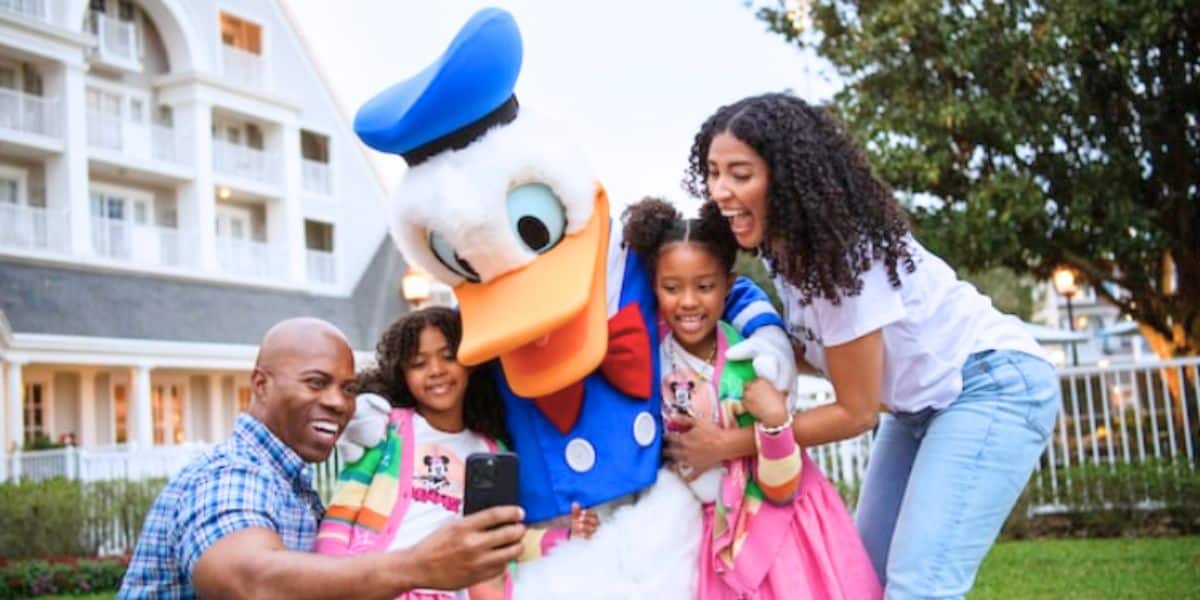
- Shorter Stays: The week-long “immersive” vacation is being replaced by 3-day “sprints” to keep costs down.
- Off-Site Lodging: Families are increasingly abandoning the “Disney Bubble” to stay in Airbnbs or offsite hotels in Kissimmee to save on room rates.
- The “Once-in-a-Lifetime” Shift: Disney used to be an annual or biennial trip for many. By 2031, it will likely become a “once-in-a-childhood” event, if it happens at all.
- The Rise of Competitors: As Disney prices skyrocket, many families are looking toward Universal Studios or regional theme parks like Dollywood and Cedar Point, which offer high-quality experiences at a fraction of the cost.
Conclusion: The Future of the Kingdom
The trajectory toward an $11,000 Disney World vacation by 2031 seems nearly set in stone. Unless there is a massive shift in corporate strategy or a significant economic correction, the gates of the Magic Kingdom will continue to narrow.

Walt Disney once said, “To all who come to this happy place: Welcome.” But as we look toward the next decade, that welcome mat seems to have a much higher cover charge. For the American middle class, the “Happiest Place on Earth” is becoming the “Most Expensive Place on Earth,” and the window for an affordable family vacation is slamming shut.
If you’re planning to take your family to see the castle, the message is clear: start saving now, because the $11,000 mouse is coming for your wallet.




This artical hits the nail on the head. How very sad that this is what has become of Disney. I wish people would get wise and stop coming, bringing the head count down to the point where CORPORATE would be thrown into a panic. However, I know that would never happen in my day. But Disney beware….nothing lasts forever.