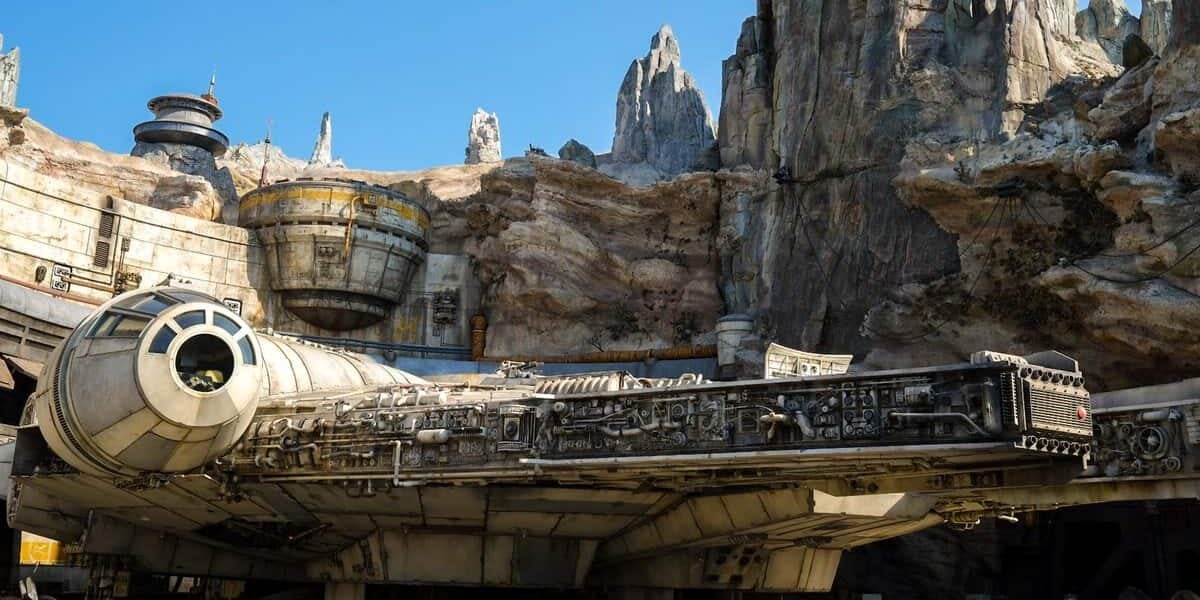
Disney’s future CEO just basically admitted that one of the most popular rides at Galaxy’s Edge has a fundamental problem, and the company spent YEARS working on a secret redesign to fix it. We’re talking about Millennium Falcon: Smugglers Run, the attraction with consistent two-hour waits that everyone assumes is a massive success.

Turns out? Not so much.
According to new reporting from Harvard Business Review (yeah, the business magazine), researchers following Josh D’Amaro around Disney watched him sit in a conference room with 30 Imagineers and basically say “this ride isn’t good enough.” And his specific words matter here because they reveal something Disney doesn’t usually admit about its attractions.
“Guests like it,” D’Amaro said about Smugglers Run, “but they don’t love it.”
And apparently, that difference between “like” and “love” is a HUGE deal for Disney. So huge that they were planning a complete redesign of an attraction that already draws massive crowds and seems wildly popular from the outside. Because here’s the thing most people don’t realize about theme parks: Disney doesn’t just want you to enjoy rides. They want you to be so obsessed with them that you come back over and over, tell everyone you know about them, and build your entire Disney identity around them. Anything less than that counts as a failure even if the ride is technically successful by normal standards. This whole situation reveals how Disney actually thinks about its attractions behind closed doors, and why an attraction pulling two-hour waits still wasn’t meeting their internal standards.
The gap between what looks successful to guests and what Disney considers truly successful is apparently enormous, and Smugglers Run fell right into that gap despite appearing to be one of Galaxy’s Edge’s biggest draws.
The Problem Disney Finally Admitted

The ride puts six people in the Millennium Falcon cockpit, right? And everyone gets assigned different roles: two pilots, two gunners, two engineers. Sounds cool, sounds fair, everybody gets to participate.
Except only the pilots actually get to DO anything meaningful.
The pilots genuinely control the ship. They steer, they make decisions, their actions affect what happens. When they finish the ride, they feel like they actually flew the Falcon. That’s the experience Disney wanted to deliver, and for those two people per ride, it works perfectly.
But the other four people? The gunners and engineers? They’re basically just pressing buttons that trigger predetermined stuff. They’re not really controlling anything. They’re not making meaningful choices. They’re passengers with busy work, not active participants in an adventure.
And Disney knew this was a problem because of how guests were behaving. Anyone who’s ridden Smugglers Run has seen the negotiations happening in line. Families arguing about who gets to be pilot. Parents promising kids “you can be pilot next time.” The visible disappointment when someone gets assigned to engineer instead of pilot. All of that behavior was guests telling Disney “we know these positions aren’t equal and we all want the good one.”
Two-thirds of riders were getting a diminished experience every single time. That’s not a minor flaw. That’s a fundamental design problem baked into how the attraction works.
Why “Like” Isn’t Good Enough for Disney
Here’s where it gets interesting from a business perspective. The Harvard Business Review researcher studying D’Amaro talks about this concept called “experience intelligence,” which is basically the ability to create experiences that make people feel specific emotions. And according to research they cite, only ONE emotion actually predicts what customers do next.
Love.
Not enjoyment. Not appreciation. Not respect. Not satisfaction. Only love makes people come back, recommend things to others, and build long-term relationships with brands.
So when D’Amaro says guests “like” Smugglers Run but don’t “love” it, he’s not just being picky. He’s identifying a specific business problem. Guests who like an attraction might ride it once during their trip. Guests who love an attraction become obsessed, ride it multiple times, tell everyone about it, and make it part of their Disney identity forever.
Disney doesn’t invest hundreds of millions building attractions so people can like them. They build them to create lifelong advocates who drive future business through enthusiasm that no marketing campaign can replicate.
From that perspective, Smugglers Run was failing even though it had two-hour waits. It was processing guests efficiently without creating the emotional intensity that actually matters for Disney’s business model.
What Disney Was Planning to Fix It

The redesign they were working on aimed to solve the fundamental agency problem. Instead of accepting that four out of six riders would get secondary experiences, Disney wanted to make EVERY position feel essential and exciting.
The specific details weren’t shared in the research observations, but the goal was clear: transform Smugglers Run so that all six people feel like they’re genuinely piloting the Falcon together, not just two people flying while four people assist.
They wanted to change what guests say after riding from “I liked it, but I wish I’d been pilot” to “I loved it” regardless of what seat they got assigned.
And D’Amaro was personally involved in this redesign work despite being upcoming CEO of the entire company. When the researcher asked about this, he basically said that helping more guests say they love Disney is worth his time no matter what else is on his plate.
The redesigned version was supposed to debut in May, though Disney never publicly announced specific details or confirmed timing. D’Amaro admitted he didn’t know for sure if his diagnosis was right until guests actually experienced the changes and Disney could see if it worked.
They’ve Been Making Other Changes Too
While that major redesign was in the works, Smugglers Run has been getting other tweaks that suggest Disney’s still experimenting with how people experience the ride.
Recently, they added a Double Rider queue alongside the existing Single Rider option. This is interesting because it creates a middle ground between waiting in the full standby line with your whole group and going Single Rider where you’re separated from everyone.
Double Rider lets two people enter together and stay together without committing to the long wait, but you still don’t know what positions you’ll get. You might both end up as engineers. You might get pilot and gunner. It’s togetherness without certainty.
This addition suggests Disney’s thinking about the psychological side of how guests approach the attraction. Some people want shorter waits but refuse to be completely separated from their party. The Double Rider queue acknowledges that emotional priorities don’t always match operational efficiency.
Whether this connects to the bigger redesign or is just independent fine-tuning isn’t clear, but it shows Smugglers Run keeps evolving even years after opening.
The Bigger Leadership Thing Happening Here
The Harvard Business Review article about D’Amaro isn’t actually about Smugglers Run. It’s about his entire leadership approach and how he thinks about running Disney.
The researcher followed him around parks, watched him interact with cast members and guests, sat in on his Imagineering sessions. And what they documented was this philosophy where D’Amaro is absolutely obsessed with creating experiences people love rather than experiences people merely like or tolerate.
He spends hours deciding on trash can colors and placement on Main Street. He runs an Instagram account answering any cast member question and making all the answers public. He dedicates serious time to analyzing exactly how to make rides beloved instead of just functional.
That’s the context for why he cared so much about Smugglers Run only being “liked.” In his framework, that’s a failure regardless of wait times or attendance numbers.
The article compares him to other upcoming CEOs who’ve adopted similar approaches at companies like Kroger, Chick-fil-A, and even PG&E, where focusing on creating love instead of satisfaction has produced measurable business results. Kroger did a whole “From like to love” initiative that increased employee retention and same-store sales. Chick-fil-A obsesses over wrapping chicken sandwiches in loving experiences. PG&E launched a “leading with love” campaign that people initially rolled their eyes at but that actually worked.
So this isn’t just Disney being extra. It’s a specific leadership philosophy that’s showing up across different industries where companies are realizing that emotional intensity matters more than conventional satisfaction metrics.
What This Means If You’re Visiting Galaxy’s Edge
If you’re planning a trip and Smugglers Run is on your list, here’s what you should know going in.
First, pay attention to how different roles actually feel. The criticism D’Amaro identified about pilots having all the agency while everyone else presses decorative buttons is real. If you get pilot, you’ll probably love it. If you get engineer, you might leave thinking “that was fine but I wish I’d been pilot.”
Second, the Double Rider queue exists now if you want to ride with one other person without committing to the full standby wait. You won’t know what positions you get, but at least you’re together.
Third, there MAY be a redesigned version coming (or maybe already here?) that gives all positions more meaningful control. Disney hasn’t publicly announced this, and the Harvard Business Review research was observing planning sessions that could have been talking about changes scheduled for May or later. So it’s unclear if anything’s actually different yet or if this is still in development.
The smart move is to manage your expectations based on which role you get and understand that Disney itself recognized the experience varies dramatically depending on your seat assignment. That’s not you being picky. That’s Disney’s own future CEO identifying the exact same problem you’re noticing.
The Question Disney’s Betting Everything On
The real gamble here is whether Disney’s diagnosis was right. Spending years and presumably millions redesigning a functioning attraction that already draws massive crowds is a HUGE bet that the difference between “like” and “love” matters enough to justify that investment.
If they’re right, the redesigned Smugglers Run creates more Disney advocates who return multiple times, bring others, and generate lifetime value that far exceeds the redesign cost.
If they’re wrong, they spent enormous resources fixing something that wasn’t actually broken and guests don’t notice or care about the changes.
D’Amaro admitted he won’t know which until guests actually ride the new version and Disney sees the response. That’s a pretty honest acknowledgment that this whole thing is an educated guess rather than a guaranteed win.
But the fact that he was willing to make that bet reveals how seriously Disney takes the distinction between satisfaction and genuine love. Most companies would look at two-hour waits and call it success. Disney looked at two-hour waits and said “not good enough because people don’t love it.”
That’s either visionary leadership or expensive overthinking, and we’ll find out which once the changes actually roll out and guests decide whether the new Smugglers Run experience is truly better or just different.
Have you ridden Smugglers Run? Did you get pilot or one of the other positions, and how did that affect your experience? Drop a comment about whether you think Disney’s right that the ride needs fixing or if they’re overthinking something that’s already great. And if this made you realize why you liked Smugglers Run but didn’t LOVE it, share it with your Star Wars-obsessed friends so they understand why they felt weirdly unsatisfied despite riding the Millennium Falcon.