Universal Orlando Resort has made a name for itself by going big. The rides are faster, louder, and more intense than almost anywhere else in the theme park world. Roller coasters fly inches from the ground, dark rides throw guests into massive screens and moving vehicles, and nearly every attraction promises a rush.
But that promise doesn’t land the same way for everyone.
For many plus-size guests, the excitement comes with a recurring frustration. A growing number of Universal’s most popular attractions simply aren’t built to accommodate a wide range of body types. That reality has now settled into a hard number: 17 attractions across Universal’s parks that plus-size guests are effectively banned from riding due to restraint systems and seating limitations.
Before breaking down how widespread the issue has become, it helps to look at how Universal ended up here.
How Ride Design Became a Barrier
Universal leans heavily into aggressive ride systems. Over-the-shoulder restraints, snug lap bars, motorcycle-style seating, and test seats at ride entrances define much of the resort’s lineup. These features exist for safety, but they also create narrow margins for who can actually ride.
This pattern is most evident on roller coasters and large-scale 4D attractions. Compact vehicles and rigid restraints leave little flexibility, turning ride access into a moment of uncertainty for many guests. Instead of excitement, boarding becomes stressful.
Universal hasn’t hidden these limitations, but it hasn’t resolved them either. As new attractions open, the list of rides with size restrictions keeps growing.

Coasters That Shape the Experience
Several of Universal’s signature coasters set the tone for this ongoing issue.
At Universal Studios Florida, Revenge of the Mummy combines enclosed ride vehicles with tight lap bars that can be uncomfortable or unworkable for some riders. Across the resort at Islands of Adventure, Jurassic World VelociCoaster raises the stakes with slim seating and firm restraints that many guests never clear.
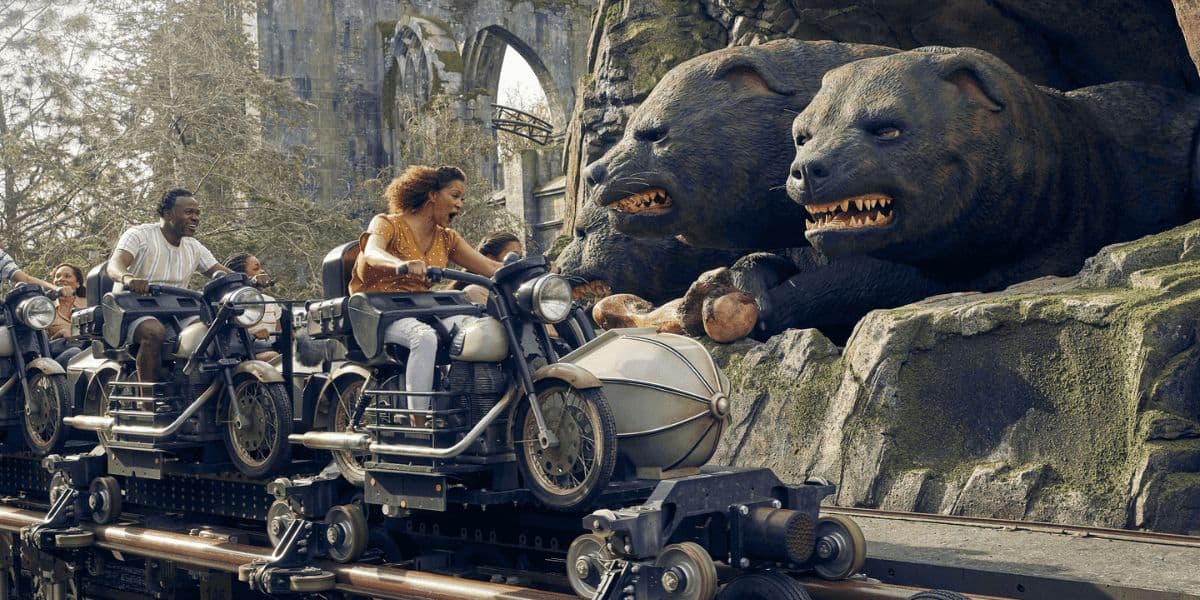
Hagrid’s Magical Creatures Motorbike Adventure introduces motorcycle and sidecar seating, which limits flexibility even further, especially for guests assigned to the bike. The Incredible Hulk Coaster continues the pattern with over-the-shoulder restraints that sit especially close across the torso.
Even The High in the Sky Seuss Trolley Train Ride, a family-friendly attraction, surprises guests with seating that feels far more restrictive than expected.

When Dark Rides Aren’t Any Easier
Dark rides often seem like a safer bet, but Universal’s immersive attractions bring their own challenges.
Harry Potter and the Forbidden Journey is one of the most well-known examples, with a robotic arm system and a test seat that many guests never pass. At Studios, Harry Potter and the Escape from Gringotts uses individual lap bars that offer little room for adjustment.
At Islands of Adventure, Doctor Doom’s Fearfall and Dudley Do-Right’s Ripsaw Falls add more rides to the list, each with restraint systems that limit who can safely participate. Pteranodon Flyers goes even further, enforcing size requirements that exclude many adults entirely.
Epic Universe Followed the Same Blueprint
When Epic Universe was announced, hope ran high. A new park meant new ideas and a chance to rethink old design choices. That optimism didn’t last.
Epic Universe continued the same approach. Mine-Cart Madness relies on compact vehicles, while Monsters Unchained and Harry Potter and the Battle at the Ministry use familiar restraint systems with known limitations. Curse of the Werewolf and Stardust Racers also prioritize tight seating, while Dragon Racer’s Rally and Hiccup’s Wing Gliders add even more restrictions.
Because Epic Universe has fewer attractions overall, each inaccessible ride carries more weight.

Why This Issue Hits So Hard
The impact goes beyond missing a thrill. Test seats, last-minute denials, and public moments of exclusion take an emotional toll. Over time, many guests stop trying, planning trips around what they already know they can’t ride.
Until Universal changes its design philosophy, this conversation won’t fade. With 17 attractions effectively off-limits, the gap between excitement and inclusion remains impossible to ignore.